
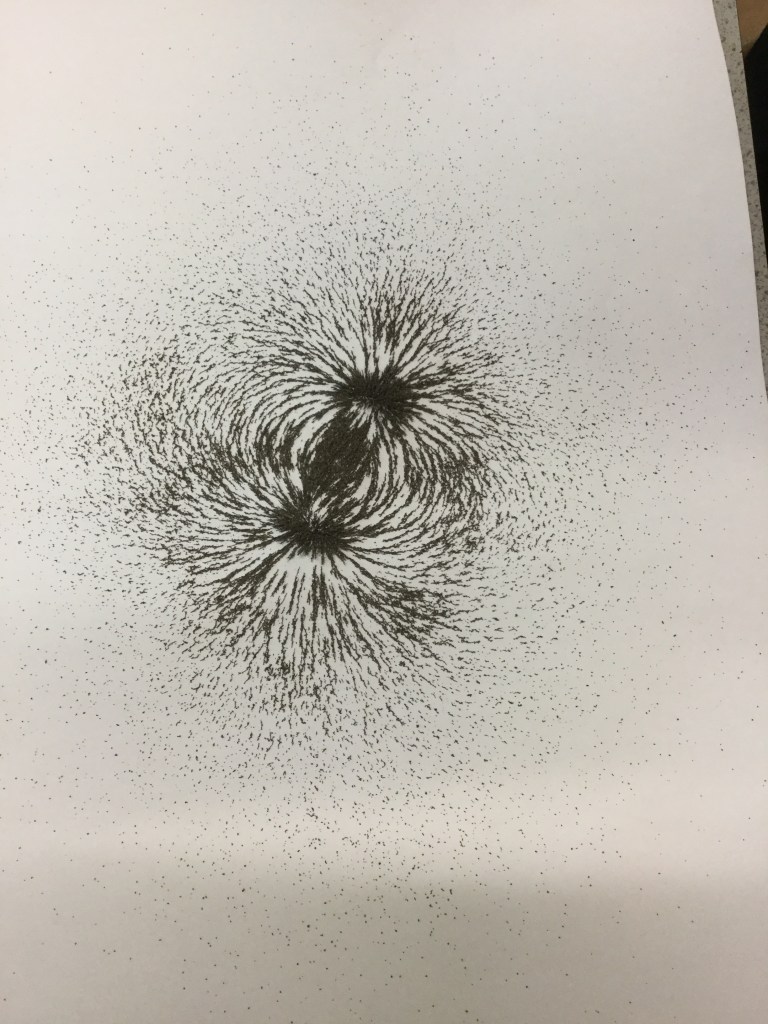
There are loads of reasons why training students for practical work is important. The biggest of these, in my opinion, is so that they’re more engaged in the scientific process, and know how it works. Clearly, scattering some iron filings round a magnet doesn’t match professional lab research. However, the general process is pretty similar – it’s the scientific techniques that bring the complexity (not that I’ve worked in such labs, of course.) Also, it makes my life easier during practical work, since I spend less time answering methodological questions.
There are a few steps to this that I’ll outline in this blog.
Early in the year, the emphasis is on step-by-step demonstrations, where students do each step as I do, and on ensuring safe practice. This means that we’ll read each step of the method together, I’ll show them how to do it, and then they’ll do it themselves. I generally won’t do this more than twice at most for any given class. Also at this point, I’m happy to answer questions about how to follow the method, and how to use the standard equipment.
For the next couple of experiments, we’ll go through the method together, then I’ll do a full demonstration, and then they’ll do the practical themselves with less guidance. Here I’ll maybe answer a couple of method-related questions, but perhaps not questions they’ve had answers to before (e.g. how to use a measuring cylinder or what kind of results table to draw).
If a class seems to struggle with some key skills, then I’ll also have them tell me how to do the demonstration. Deliberately making mistakes, like flopping my tie onto the desk whilst sitting in front of a Bunsen burner, or reading from a thermometer from about 80º from ‘in-line’, seems to encourage engagement
The next stage here is to hand out the comprehensive method, give some reading time, and then invite any questions about how the experiment will run. From here, students work as independently as possible. By now, I’ll answer questions about the science behind a practical task, but I won’t answer method questions. Because students know this, they’ll work with their partners and peers more closely, and compare the way they’re doing things.
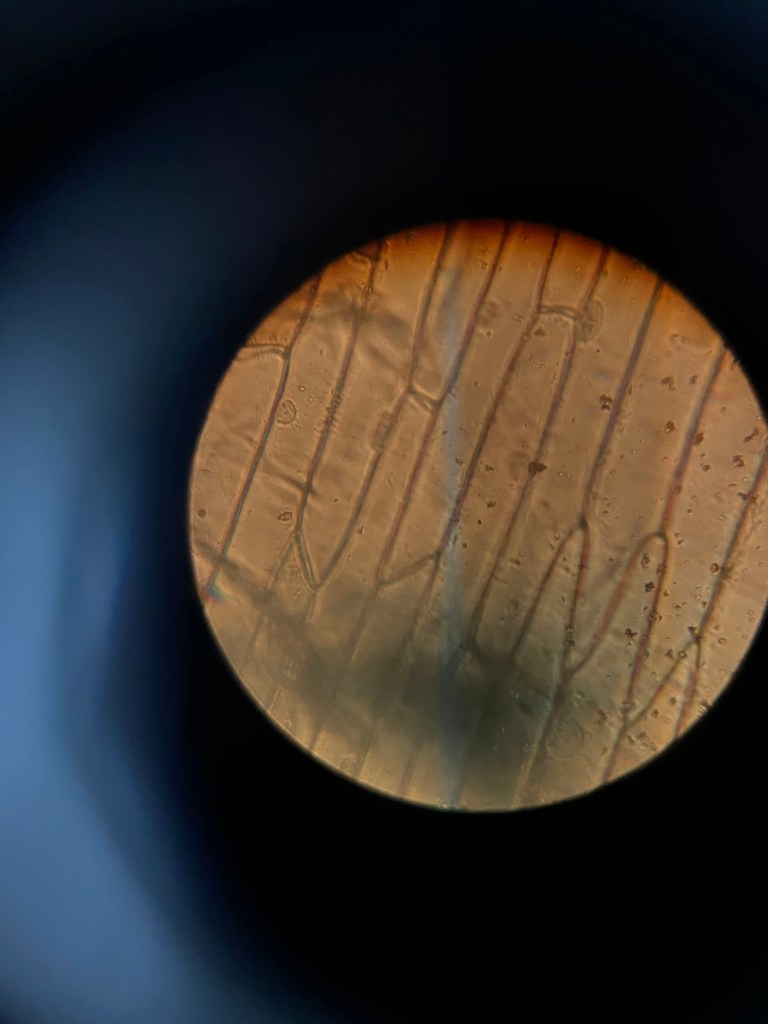
At this point it might be worth noting that if students are about to use some new equipment for the first time, then I’ll still demonstrate how to use this properly and safely. I’m lucky enough to have had time to do practical work with my classes before the late-2020/early-2021 lockdown(s), and so the students were pretty good at getting on with the tasks on their own. However, we recently looked at onion skin cells using microscopes; we spent time before the lesson talking about how microscopes work and how to use them, and then I demonstrated it briefly at the beginning.
The main advantage of having students work as independently as possible (ideally as early as possible) is that it frees up my time during the lesson. This allows me to observe their technique using equipment, discuss the validity/reliability of results with students, talk about the science behind what’s happening, and of course, keep an eye on safety. However, it does mean that practical lessons are almost entirely practical lessons, and there isn’t a huge amount of time for any theory in those early lessons. I would argue that the time-cost is worth the skills they gain. Also, practicals are fun.
Some ways of encouraging good practice:
- Keeping an eye on a range of students from the front, so I can catch any unsafe practice early, and call it out
- Noticing good technique (e.g. crouching to read volumes in measuring cylinders etc) and highlighting this to other students so they think to do the same thing
- Giving actual concrete praise for effort (think: good notes in planners etc)
- Framing necessary improvements as questions – ‘how can you improve X?’ or ‘what other ways are there of measuring Y?’ or ‘do the results you’ve collected make sense logically?’
- Ask the students questions about the science behind the experiment. Can they link the conclusions they draw to the theory? This is useful for, say, cells. Can they identify any subcellular structures? (Probably not, but they’ll try!)
- If we’re doing the practical before the theory, can they use their results to predict the theory? (This would be useful with Hooke’s Law, for example)
Hopefully this post has given an idea or two of ways to foster some independence in pupils during practical work for freeing up time during lessons.
 odeneal.blog
Leave a comment