
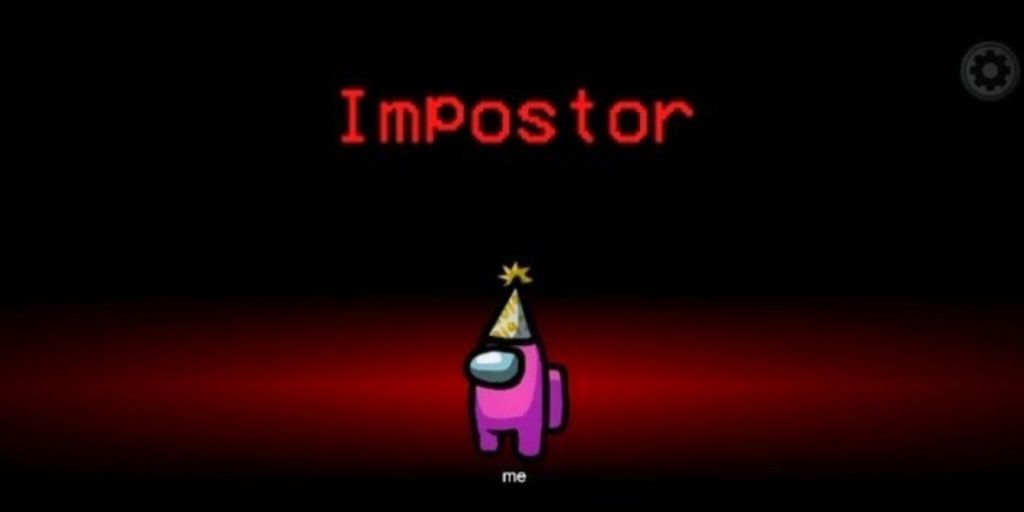
Imposter syndrome isn’t a new thing. It’s clear from my Twitter timeline that it’s far more common than a lot of people think it is, and I’m certainly in that group. In this post I’ll talk a bit about where I’ve experienced imposter syndrome, and how I’ve tried to overcome it.
Experiencing imposter syndrome as a teacher
There are two main places I find that this happens and, despite generally being more confident than I used to be, it still comes back in waves sometimes.
The first is at work when I’m teaching something new. For example, despite having taught lots of A level Physics whilst training as a teacher, I then didn’t teach any during my first two years post-ITT. This meant that at the start of this academic year, I suddenly had to re-learn a lot of it. With a degree in theoretical physics, you’d think I’d not be daunted by this, but I absolutely was (and I don’t think there’s any shame in admitting that I didn’t remember the details of something I hadn’t studied in 7 years!) I was particularly nervous about the quantum physics topic (since I really didn’t get along well with it at uni). In reality though, quantum mechanics at university-level is absolutely not the same as A level, and so once I got into it a bit, it was fine.
To get past the advanced physics nerves, being prepared enough to plan the topic from scratch helped immensely. It meant that I had to completely revise the topic, and plan the questions I’d ask, and consider how I’d answer the questions I was asking myself whilst re-learning the topic. It was a fair bit of work, and took a long time, but was worth it. (I’m also really glad I kept my university textbooks; they’re not just a decoration on the shelf anymore).
Imposter syndrome as a researcher
Because there is a small taught element to my course, we have the odd full day here and there, which consists of some seminar-type sessions with peers and the established academic researchers that run our course. I distinctly remember at the end of the first of these days, which are relatively intense, being exhausted, which was particularly confusing given that I’d sat in the same chair all day.
During some of the discussions, I couldn’t shake the feeling that I shouldn’t be there, and I didn’t have anything to contribute, and when I did think of something to say, who’d really want to hear it? In those first couple sessions I definitely took a bit of a back seat, and was very much an observer. However, once I started getting involved in these discussions, I could see that I did have something to say, and the people I was talking to did seem to want to hear it (or at least it came across that way – they were very polite).
This did seem to start to get worse once I started writing the systematic literature review (see the blog post about that here) given that I’d never written anything like it, and it became very clear, very quickly, quite how much I don’t know about my topic. (Ignorance truly is bliss). It was certainly harder to do the write-up than I initially anticipated, but obviously not impossible.
How do I get past it?
The review imposter-ness was much easier to get over once I started to establish a bit of a community with the some of my peers. We organised a couple of brief Zoom chats to answer each other’s questions, and make ourselves feel better about the process.
A few of us went from there and started joining a Zoom call together each day, telling each other what our goals were, and holding each other accountable. We’d turn our mics and cameras off, do some work for an hour or 90 minutes, and then report back how much we’d achieved. Part of this accountability was explaining parts of the topic to each other, meaning we’d also have to form coherent independent thoughts about the topic so that we can explain clearly, which also helped.
Interspersing this work with a bit of chat made the work so much more fun, too. It became clear that we were all in the same boat, and we were all feeling the same thing to an extent. Some of this chat is what led to my Twitter poll about chocolate storage, including some interesting results:
Finally, it’s worth noting that generally, people aren’t (usually) given opportunities they’re not capable of taking on. I wouldn’t be studying for a doctorate if I wasn’t qualified enough to be admitted onto the course. I wouldn’t be teaching A level physics without my theoretical physics degree. It’s a bit cliché, but I firmly believe people end up where they’re meant to.
(Except Gavin Williamson – he’s definitely in the wrong job).
 odeneal.blog
Leave a comment